null Skip to main content
About Us Contact Us Blog 9706376000
Sidebar Sidebar Sidebar

Engine

Snowmobile Engine Parts & Rebuild Components

A snowmobile engine operates in conditions that would challenge any powerplant. Sub-zero air temperatures that make cold starting a test of every component in the ignition and fuel system. Sustained wide-open-throttle runs across frozen lakes and open meadows that push two-stroke engines to the limits of their thermal capacity. Deep powder days where the engine works constantly at high RPM while the cooling system fights to keep up with the heat load through snow-packed tunnels and restricted airflow. The engines in modern performance sleds are engineering marvels, but they are not maintenance-free, and when they need attention the quality of the parts you put in them determines how long they last and how reliably they perform when the season is at its peak.

Mad Lads Moto stocks snowmobile engine parts for two-stroke and four-stroke powerplants across all major platforms. The majority of high-performance sleds run two-stroke engines that require more frequent top end attention than four-stroke machines, and staying ahead of that maintenance schedule is what keeps a sled on the snow instead of in the shop during prime riding season. Whether you are doing a pre-season top end refresh, rebuilding a bottom end after a hard season, or replacing worn gaskets and seals to address a leak before it becomes a bigger problem, we have the components you need. Here is what we carry:

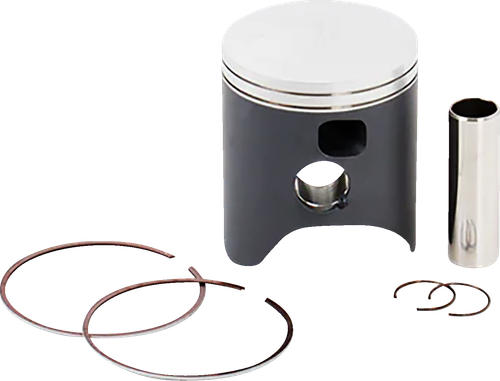
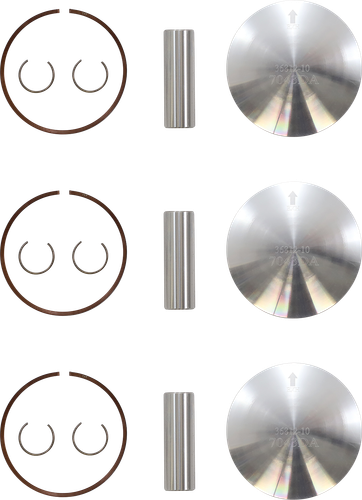
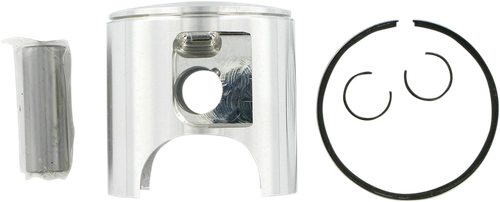
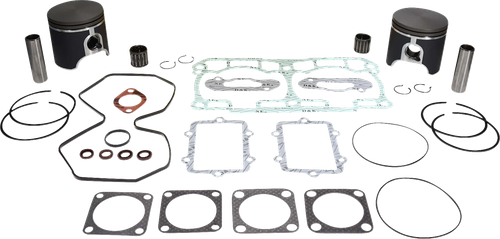
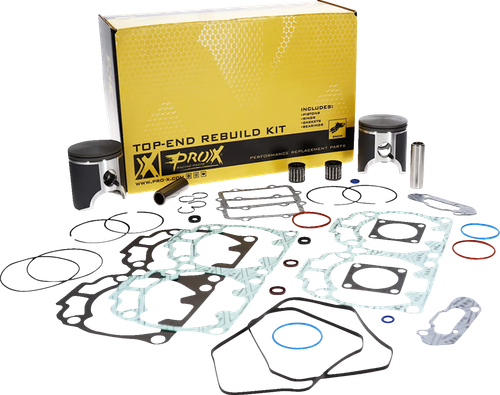
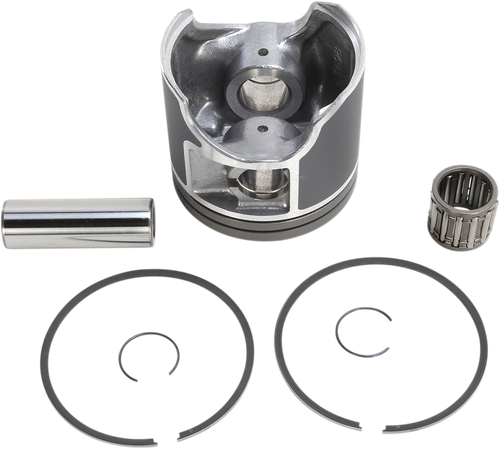
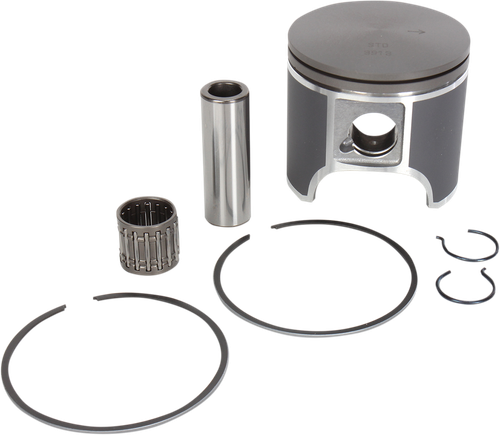
  • Piston Kits - Complete piston kits including piston, rings, wrist pin, wrist pin bearing, and circlips for two-stroke and four-stroke snowmobile engines in standard and oversized bores covering all major makes and displacement classes.
  • Cylinders & Big Bore Kits - Replacement cylinders and big bore cylinder kits that increase displacement for riders who want more power from their existing engine platform without a complete powerplant swap.
  • Crankshaft Assemblies - Complete OEM-spec crankshaft assemblies for two-stroke snowmobile engines where crank wear, rod bearing failure, or crank seal deterioration requires bottom end attention before or after a season of hard riding.
  • Connecting Rods & Rod Kits - Individual connecting rods and complete rod kits with bearings and hardware for bottom end rebuilds and targeted rod replacement on high-hour two-stroke engines.
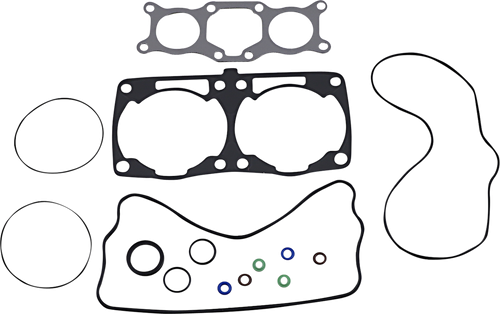
  • Top End Gasket Sets - Complete top end gasket kits covering the base gasket, head gasket, exhaust gaskets, and all associated seals needed for a complete top end rebuild without hunting down individual gaskets separately.
  • Complete Engine Gasket Kits - Full engine gasket sets covering every gasket and seal from top to bottom for complete engine rebuilds where everything gets replaced in one comprehensive service.
  • Crank Seals & Engine Seals - Two-stroke crank seals, output shaft seals, and engine oil seals that are critical to maintaining proper crankcase pressure and preventing air leaks that lean out the fuel mixture and cause engine damage.
  • Reed Valves & Cages - Replacement and performance reed valves and reed cages for two-stroke snowmobile engines where reed condition directly affects low to mid-range power delivery and throttle response.
  • Engine Bearings - Main bearings, crank bearings, and transmission bearings for snowmobile engine rebuilds requiring precision bearing replacement to restore proper clearances.
  • Power Valves & Exhaust Valves - Two-stroke power valve components, power valve governors, and exhaust valve assemblies for engines equipped with variable exhaust timing systems that affect power delivery across the RPM range.

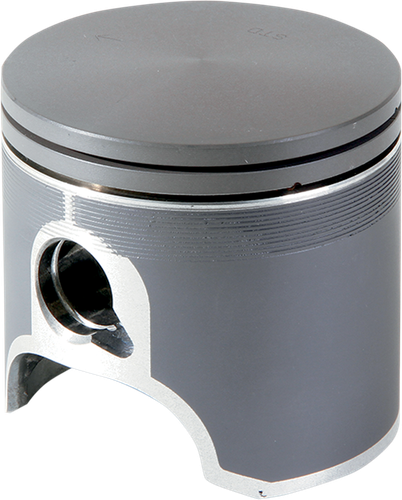
Two-stroke snowmobile engines live and die by the quality of their top end components and how religiously the rebuild schedule is followed. A piston that goes past its service life in a high-output sled does not just wear out gradually. It often fails catastrophically and takes the cylinder, connecting rod, and sometimes the crankshaft with it. The cost of a preventive piston replacement is a fraction of what a full engine rebuild costs after a seized top end. Wiseco piston kits cover an extensive range of snowmobile applications and are a trusted choice for riders who want forged piston quality in their sled. Vertex piston kits are popular among European sled owners and high-performance two-stroke builders. Cometic gasket sets deliver reliable sealing across virtually every major snowmobile platform on the market. We stock engine components for Ski-Doo, Polaris, Arctic Cat, Yamaha, and Lynx. Use our year, make, and model fitment tool to confirm fitment before you order.

How often should I rebuild the top end on my two-stroke snowmobile?

Top end rebuild intervals for two-stroke snowmobile engines depend on the specific engine, how hard it is ridden, and whether it is tuned to run at the edge of its power output or dialed back for reliability. Performance sleds from Ski-Doo, Polaris, and Arctic Cat running high-output two-stroke engines benefit from top end inspection every 2000 to 3000 miles and piston replacement every 3000 to 5000 miles under hard riding conditions. Trail riders who spend most of their time at moderate throttle openings on groomed trails can stretch those intervals somewhat, while aggressive powder riders who spend significant time at wide open throttle should stay toward the shorter end of the range. A compression test at the start and end of each season gives you a reliable picture of where the top end stands regardless of mileage, and catching a piston that is approaching the end of its service life before it fails is always preferable to rebuilding after a catastrophic failure.

What causes a two-stroke snowmobile engine to seize?

Two-stroke engine seizures on snowmobiles most commonly result from running lean, inadequate lubrication, detonation, or operating a worn top end past its service limit. Running lean is the most common cause and can result from a clogged fuel filter, a failing fuel pump, a carburetor that has been jetted incorrectly for altitude or temperature conditions, leaking crank seals that pull air into the crankcase, or a reed valve that is not sealing properly. Inadequate oil injection from a failing oil pump or low oil supply causes the engine to run without sufficient lubrication on the cylinder walls and piston. Detonation from incorrect ignition timing, poor fuel quality, or an engine running too hot damages the piston crown and ring land area and can cause a seizure that looks similar to a lean condition on inspection. A piston that has exceeded its service limit loses its proper clearance in the cylinder as it expands under heat and eventually contacts the cylinder wall under hard operation.

Can I use the same piston kit for my snowmobile that fits a dirt bike with the same engine displacement?

Not necessarily. While some snowmobile engines share basic architecture with motorcycle or ATV engines from the same manufacturer, snowmobile applications often run different bore dimensions, different compression ratios, different port timing, and different cooling configurations than their land-based counterparts. Even where the displacement is identical, the specific piston dimensions, ring profiles, and wrist pin dimensions may differ in ways that make a cross-platform piston kit incompatible or unsafe for snowmobile use. Always source piston kits using your sled's specific year, make, model, and engine designation rather than relying on displacement matching alone. Our fitment tool is the most reliable way to confirm that a piston kit is correct for your specific snowmobile engine before you order.
Review Your Cart Close Close
Your cart is empty

Recently viewed

Recently Viewed Recently Viewed
Social Media Social Media
Top Top