 US Dollars
Some Roads Don't Let You Go
There is a moment I keep coming back to. I am standing in a river in northern Vietnam, water up to my thighs, both hands death-gripping the bars of a Honda XR400R that very much does not want to be in this river. Somewhere behind me, Evan is shouting something I cannot hear over the current. Somewhere ahead of me, Andrew is doing what Andrew had been doing for the better part of ten days, which is making a bad situation slightly more complicated.
On the bank, a group of village kids, maybe eight or ten of them, are watching us with the biggest, most delighted, white teeth shining smiles I have ever seen on a human face. They are not worried about us. They are entertained by us. They cannot understand for the life of them why these big dumb Americans would choose to do this. At that moment, with the current pulling at my boots and the XR threatening to tip, I understood that we were not the adventurers we thought we were. We were the entertainment.
This is how it usually goes when you ride somewhere that doesn't care about your plans.
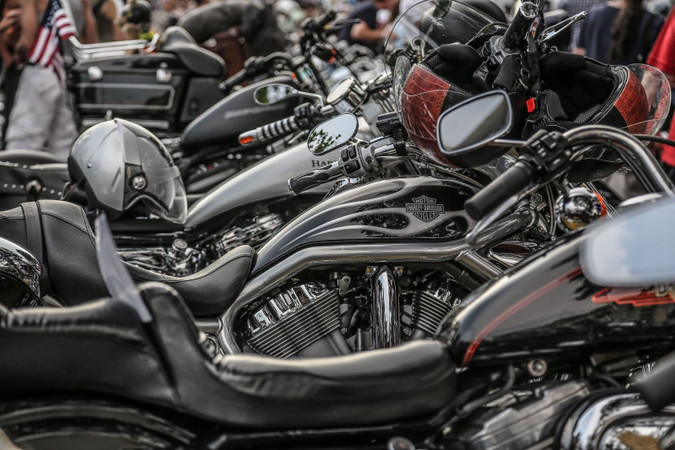
I want to tell you what this blog is going to be, and I figured the best way to do that is to tell you a story first. My name is Hank Caldera. I have been riding motorcycles for over thirty years, writing about them for nearly as long, and wrenching on them badly at first and better over time. I have covered motocross, off-road, harescrambles, street, V-twin culture, adventure riding, and things that don't fit neatly into any category. I have ridden bikes that cost more than my first house and bikes that cost less than dinner.
This blog, Mad Lads Moto, is not going to be a press release. It is not going to be a gear roundup written by someone who got the gear for free and has never actually used it hard. It is going to be honest writing about riding, wrenching, gear, destinations, and the kind of culture that grows up around people who ride because they genuinely cannot imagine not riding.
That's the pitch. Now, back to the river.
Vietnam, 2001
The trip came together the way most good trips do: loosely, with too little planning and just enough commitment to make backing out embarrassing. Five of us: Evan, Andrew, Jay, Julian, and me. The plan was ten days in northern Vietnam on motorcycles, starting in Hanoi, heading up into the mountains, and figuring out the details as we went. This is how we did everything.
The year matters here. This was 2001, not now. Vietnam had been open to tourism for about a decade, but "open" is a relative word. International phone calls were made from post office booths if you could find one. ATMs existed, but sparingly, and they had opinions about which cards they'd accept. GPS was something that lived in military satellites and expensive handsets that none of us owned. You navigated with paper maps, with hand signals from locals, and occasionally with the kind of stubborn confidence that is really just a fear of admitting you are lost.
We rented Honda XR400Rs from a shop in Hanoi that I would not describe as formal. The bikes were legitimate XRs, which was a genuine luxury compared to the beat-up Honda Win semi-automatics that most backpacker riders were on. The Win was the regional standard for touring at the time: cheap, simple, available everywhere, and forgiving enough that a mechanically illiterate person could keep one running with a roadside mechanic and a few dollars. We had a budget step up. The XR400 is a proper machine. Air-cooled, single cylinder, long-travel suspension, the kind of bike that makes bad roads feel like an acceptable challenge rather than a personal attack.
Renting them, however, required trust in all directions. The shop owner trusted us not to destroy them. We trusted him that they were in decent shape. Both parties were operating on incomplete information.
The Road North
Hanoi in 2001 is a city that runs on motorbikes the way other cities run on taxis. You step into traffic and you negotiate. There are rules, technically, but they are more like suggestions that everyone has agreed to interpret loosely. Getting out of the city on day one was its own lesson. You very quickly learn that riding defensively in the western sense, meaning you try to anticipate other drivers doing something predictable, does not translate. What works is riding fluidly. You stop fighting for space and start flowing with the mass of vehicles around you. It felt wrong for about twenty minutes and then it started to click.
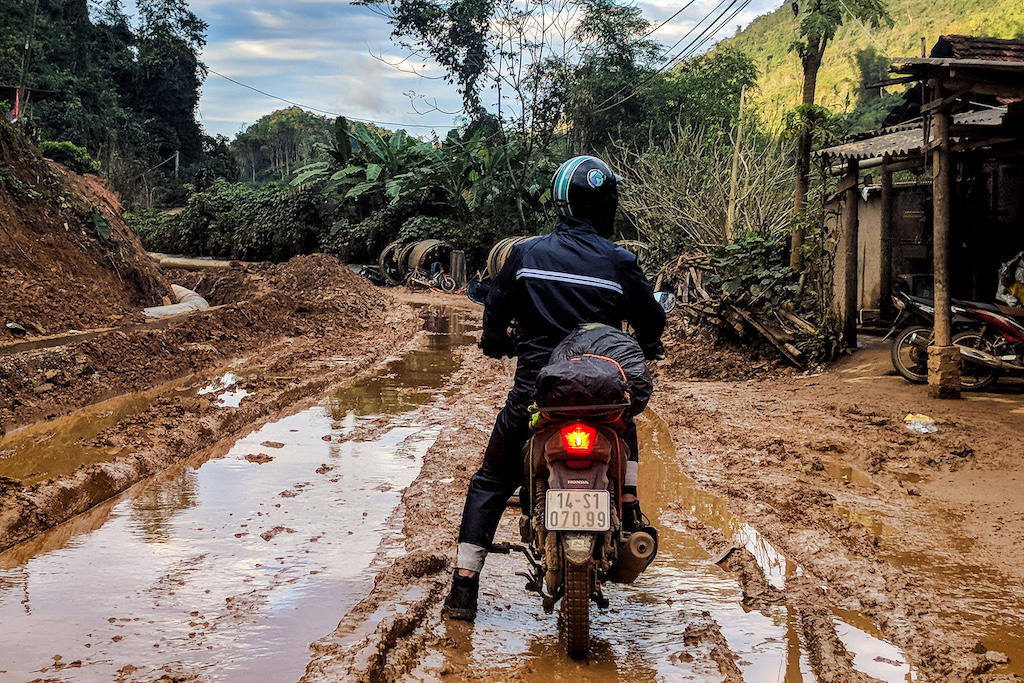
Once we got north of the city, the roads changed. They got narrower, rougher, quieter, and considerably more interesting. The landscape in northern Vietnam is not subtle. Karst limestone formations rise out of rice paddies like something from a painting that a painter would get criticized for making look unrealistic. The air gets cooler as you gain elevation. The road surface becomes a negotiation between pavement, gravel, and ambition.
We were not moving fast. There was no reason to move fast. The roads did not reward speed. They rewarded attention.
Andrew
I have to tell you about Andrew.
Andrew is a good man and a capable person in most environments. On a motorcycle in northern Vietnam, he operated as a force of creative chaos. Within the first three days, he had bent his brake lever by putting the bike down in a slow, undignified, and entirely avoidable tip-over on a mountain road. A bent brake lever is annoying but not catastrophic. You adapt your grip and keep moving.
What followed was more inventive. Somewhere between villages, Andrew's rear axle nut worked loose because it had not been torqued correctly at the rental shop. This is the kind of mechanical problem that starts as a vague wobble, graduates to a concerning noise, and ends in a conversation you do not want to have on a remote road with limited tools.
We had limited tools.
What we had was enough. Jay found a piece of metal in his pack that could be persuaded to act as a lever, we improvised our way through getting the nut back on and tight enough to ride, and we managed to limp the bike to the next town where an actual mechanic looked at what we had done and gave us the expression of a man who has seen things.
A few days later, Andrew got a flat tire. Not in a town. Not near a town. In the general vicinity of eventually reaching a town. Andrew jumped on the back of Julian's bike holding the tire with one hand and Julians waist with the other. We all commented how cute they looked. They rode ahead to find a repair shop, which in rural Vietnam means a man with a hand pump and a bucket of water for finding the puncture, sitting under a tarp by the road. They are everywhere, they are fast, they charge almost nothing, and they know what they are doing. We got the tire patched, rode back, and Andrew was grateful in the way someone is grateful when they have been inconvenient enough times that they've lost the standing to be anything else.
We gave him grief about it for the rest of the trip. We still give him grief about it. That's the deal.
The River
The crossing was not on the map, or rather, the map did not convey what it actually meant.
The river was running higher than normal, which the locals knew and which we did not know until we were standing at the bank looking at water that was moving with real purpose. There was a crossing point, a shallow ford that in normal conditions would be a minor obstacle. In these conditions it was brown, fast, and thigh-deep at the shallowest point.
We looked at it for a while. Then we did what you do when you have come too far to turn around easily and the only alternative is a long backtrack on bad roads: we decided to ride through it.
The technique for a river crossing like this is to keep momentum without being stupid about it, to keep the exhaust high, to stand on the pegs, to trust the suspension, and to not stop moving. The technique is easier to describe than to execute when the current is actively trying to redirect your motorcycle to a different country.
I made it across. Evan made it across. Jay made it across. Julian made it across, just barely, with a moment near the far bank where the front wheel caught the current and the whole bike yawed sideways and every one of us on the bank stopped breathing.
Andrew, to his credit, made it across. He did not do it cleanly. There was a moment, maybe three seconds, that felt considerably longer, where it looked like he and the bike were going to become a downstream problem. He found traction, he powered through, and he emerged dripping and grinning on the far bank.
The kids watching all of this from the bank were absolutely thrilled. They had been smiling the whole time with the specific delight of people watching something dangerous happen to someone who is not them. When we all made it across, they applauded. I don't think they expected us to make it, honestly. I'm not sure I did either.
The Night We Did Not Learn From
I will keep this brief because it deserves brevity.
There was a night, somewhere in the middle of the trip, where we found a guesthouse with cold beer and made decisions that were inconsistent with the fact that we had to ride mountain roads the next morning. We reasoned that we were on vacation. We reasoned that we had earned it. We reasoned poorly.
The next day it rained.
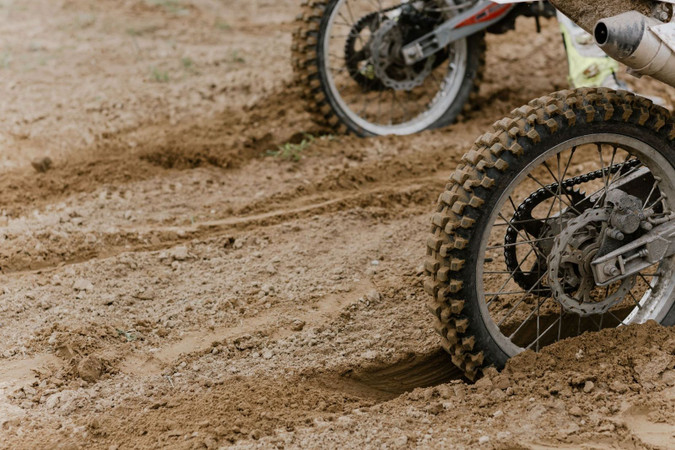
Not a gentle rain. A northern Vietnam mountain rain that comes in sideways and turns unpaved road surfaces into a demonstration of fluid dynamics. We rode hungover in the rain, sliding and dabbing our feet and occasionally falling over at low speeds in ways that are humiliating rather than dangerous, and nobody said much because there was nothing to say. We had done this to ourselves.
I have made a lot of judgment calls on motorcycles over thirty years. Some of them I would defend under questioning. That night is not one of them.
We did not make that mistake again. Partly because we had learned something, and partly because we only had a few days left and the mountains had made the point for us.
What It Comes Down To
I have ridden in a lot of places. Track days at circuits that cost a fortune to access. Desert rides where you don't see another person for hours. Single-track through forest that requires every bit of attention you have. Each kind of riding gives you something different.
Vietnam gave me a recalibration. Ten days on roads that didn't care about our comfort or our schedule or our assumptions, on bikes that needed constant mechanical attention, in a country that was operating by rules we had to learn as we went. There was no safety net. There was no roadside assistance. There was no pulling up Google Maps and getting a confident blue line to follow.
What there was: five guys, five motorcycles, a general direction, and enough shared stubbornness to keep moving when moving was the harder option.
That's riding at its core. Not the gear or the horsepower or the brand affiliation. The decision to go, and then the commitment to keep going when it gets complicated.
That's what this blog is going to be about.
What's Coming
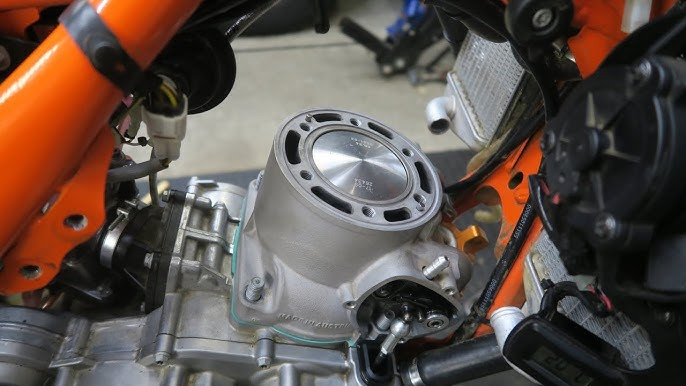
Mad Lads Moto exists because people who actually ride built it for people who actually ride. This blog is going to reflect that. Honest gear reviews. Wrenching guides written by someone who has done the job, not read about it. Riding tips that come from experience rather than theory. Destination features where you get the real version, not the brochure.
If you ride, you are in the right place. If you are thinking about riding, pull up a chair.
And if you see Andrew on a river crossing, give him some space. He is doing his best.